Ancestor Worship
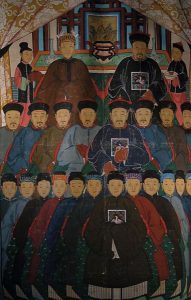 ANCESTOR-WORSHIP, a general name for the cult of deceased parents and forefathers. Aristotle in his Ethics stigmatizes as “extremely unloving” (lian afilon) the denial that ancestors are interested in or affected by the fortunes of their descendants; and in effect ancestor-worship is the staple of most religions, ancient or modern, civilized or savage. The ancient Jews were a striking exception; for though the frequent mention of ancestral graves on hilltops or in caves, and in connection with sacred trees and pillars, and the resemblance of the “elohim” in Exod. xxi. 4-6 to household gods, may suggest that cults of the dead preceded that of Yahweh, nevertheless in the classical age of their religion as reflected in the Old Testament, ancestor-worship has already vanished. “The Semitic nomads,” remarks Renan in his History of Israel (tome 1, p. 50), “were the religious race par excellence, because in fact they were the least superstitious of the families of mankind, the least duped by the dream of a beyond, by the phantasmagory of a double or a shadow surviving in the nether regions. . . . They suppressed the chimeras which went with belief in a complete survival after death, chimeras which were homicidal at the time, in so far as they robbed man of the true notion of death and led him to multiply murders.”
Renan here refers to the burial rite of an ancient Scythian king (as described by Herodotus, iv. 71), at whose tomb were strangled his concubine, cup-bearer, cook, groom, lackey, envoy, and several of his horses. Such cruel customs were, of course, and still are associated in many lands with the cult of the dead; but, on the other hand, there are gentler and more beneficial aspects observable to-day in China and Japan. There the mighty dead are present with the living, protect them and their houses and crops, are their strength in battle, and teach their hands to war and their fingers to fight. In the Russo-Japanese War in 1904-5 the greatest incentive to deeds of patriotic valor was for Japanese soldiers the belief that the spirits of their ancestors were watching them; and in China it is not the man himself that is ennobled for his philanthropic virtues or learning, but his ancestor. No more solemn duty weighs upon the Chinaman than that of tending the spirits of his dead forefathers. Confucius, it is recorded, sacrificed to the dead, as if they were present, and to the spirits, as if they were there. In view of such Chinese sacrifices the names of the dead are inscribed on wooden plaques called spirit-tablets, into which the spirits are during the ceremony supposed to enter, having quitted the very heaven and presence of God in order to commune with posterity. Twice a year, in spring and autumn,1 a Chinese ruler goes in state to the imperial college in Beijing, and presents the appointed offerings before the spirit-tablets of Confucius and of the worthies who have been associated with him in his temples. He greets the sage’s spirit with this prayer:– “This year, in this month, on this day, I, the emperor, offer sacrifice to the philosopher K’ung, the ancient teacher, the perfect sage, and say, O teacher, in virtue equal to heaven and earth. . . Now in this second month of spring, in reverent observance of the old statutes, with victims, silks, spirits, and fruits, I offer sacrifice to thee.”
In ancient Rome painted wax images of ancestors who had served the state in its highest offices were preserved in the atria or halls of their descendants, inscribed, like the Chinese tablets, with titles recording their dignity and exploits. Whether the departed spirits tenanted them according to the Chinese belief is not recorded; though it probably was so, for at funerals they might be carried, like the images of the gods in Lectisternia, on couches before the corpse. Oftener, however, they were mere masques worn at funerals by men who personated the ancestors and wore their robes of office. Perhaps the vulgar regarded these men as temporary reincarnations of those whom they thus represented.
The word Manes signified the friendly ancestral ghosts of a Roman household. To them, under the name of Lares, it was the solemn preoccupation of male descendants to offer food and sacrifice and to keep alight the hearth fire which cooked the offerings. Small waxen images of the Manes called Lares, clothed in dogskin, and on feast days crowned with garlands, stood round the family hearth of which they were the unseen guardians. To lack such care and tendance was—along with want of regular burial—the most dreadful fate that could overtake an ancient; and a Roman, like a Hindu, in case he was childless, adopted a male child whose duty it would be, as if his own son, to continue after his death the family rites or sacra. On this side the ancestor-worship of the Aryans has been productive of the most important institutions of adoption and will or testament. Sir Henry Maine (Ancient Law, ch. v.) has justly observed that “the history of political ideas begins with the assumption that kinship in blood is the sole possible ground of community in political functions,” and that in early commonwealths “citizens considered all the groups in which they claimed membership to be founded on common lineage.” A man only shared in house, tribe and state, so far as he was descended from particular ancestors and eponymous heroes, and due cult of these illustrious dead was the condition of his enjoying any rights or inheriting any property. Yet if society was to grow, men of alien descent had to be admitted into the original brotherhood and amalgamated therewith. “Adverting to Rome singly,” adds the same author, “we perceive that the primary group, the family, was being constantly adulterated by the practice of adoption.” Thus transition was made possible from an agnatic society based on blood ties to one based on contiguity.
In the worship of the Lares the head of a Roman household commemorated and reinforced the blood tie which made one flesh of all its members living and dead. The gens in turn was regarded as an expansion of the family, as was the state of the gens; and members of these larger units by worship of common ancestors—usually mythical—kept alive the feeling that they were a single organic whole animated by a common soul and joined in consanguinity. Outcasts alone, the offspring of irregular unions, could be ignorant of the blood which ran in their veins, of the unseen ancestors to be fed and tended in family and gentile rites.2 Such considerations help us to understand the enormous importance attached in ancient societies to the right of intermarriage, as also to grasp the origin of wills and testaments. For a will was to begin with but a mode of indicating (not necessarily in writing) on whom devolved the duty of conducting a parent’s funeral, and together with that duty the right of inheriting his property. The due performance of funeral rites re-created the blood tie and renewed the kinship of living and dead at the moment when death seemed specially to endanger it by removal of that representative of the household whose special duty it had been to keep up the family sacra. In Hindustan, as Maine remarks (op. cit. ch. vi.), we have a parallel to the Roman system; for there “the right to inherit a dead man’s property is exactly co-extensive with the duty of performing his obsequies. If the rites are not properly performed or not performed by the proper person, no relation is considered as established between the deceased and anybody surviving him; the law of succession does not apply, and nobody can inherit the property. Every great event in the life of a Hindu seems to be regarded as leading up to and bearing on these solemnities. If he marries, it is to have children who may celebrate them after his death; if he has no children, he lies under the strongest obligation to adopt them from another family, ‘with a view,’ writes the Hindu doctor, ‘to the funeral cake, the water and the solemn sacrifice.””
“May there be born in our lineage,” so the Indian Manes are supposed to say, “a man to offer to us, on the thirteenth day of the moon, rice boiled in milk, honey and ghee.”3
It is then in connection with the history of inheritance and adoption, and of the gradual evolution from societies held together only by blood-kinship to societies consolidated on other, bases, especially on that of local contiguity, that ancestor-worship chiefly calls for investigation.
We must now pass on to other aspects of it less important for the student of ancient law, but interesting to the folklorist.
In ancient Rome the Di manes, or as we should say the blessed dead, who reposed in their necropolis outside the walls, were specially commemorated on the dies parentales or days of placating them (placandis Manibus.) These began on the 13th of February and ended on the 22nd with the Caristia or feast of Cara Cognatio. The family have on the preceding days solemnly visited the grave, and offered to the shades gifts of water, wine, milk, honey, oil, and the blood of black victims; they have decked the tomb with flowers, have renewed the feast and farewell of the funeral, and have prayed to the ancestors to watch over their welfare. Now the survivors return home and hold a love-feast, in which all quarrels are healed, all trespasses forgiven. The Lares are brought out to preside over this solemn feast, and for the occasion are incincti or clothed in tunics girt at the loins.
It is doubtful whether we should dignify by the name of ancestor-worship the older Roman festival of the Lemuria, which was held on the 9th, 11th and 13th of May. For the lemures were, like our unlaid ghosts, unburied, mischievous or inimical spirits, and these three days were nefasti or unlucky, because their malign influence was abroad. The ghosts had to be driven out of the house, and Ovid (Fasti, v. 432) relates how the head of the family arose at midnight, and with feet unfettered by shoes or sandals, and with washed hands traversed his house beckoning against the ghosts with fingers joined to thumb. Nine times with averted glance he spat a black bean out of his mouth and cried: “With these I redeem me and mine.”
The ghosts followed and picked up, or perhaps entered into the beans. Then he washed afresh, and rattled his brass vessels, and nine times over bade them begone with the polite formula, Manes exite paterni, “Go forth, O paternal manes.”
The gesture described was probably the same as that with which a Christian priest averts demonic influences from the heads of his congregation in the act of blessing them. The many hands of Zeus Sabazios turned up in ancient excavations observe a similar gesture. All over the earth we meet with such periodically recurrent ceremonies of expelling demons and ghosts, who usually are given a meal before being hunted back into their graves. But an account of such ceremonies belongs rather to demonology than to the history of the worship of Manes, which are peaceful, well-conducted and beneficent beings, endowed and, so to speak on the foundation, like the Christian souls for whose masses money has been left. Ancestor-worship has its parallels in Christian cults of the dead and of the saints; it must be remembered, however, that a saint is not as a rule an ancestor, and that his cult is not based upon family feeling and love of kinsmen, nor tends to stimulate and encourage the same. Such cults have never prevented those who participated in them from fighting one another. Ancestor-worship on this side is also in strong contrast with the teaching of the Gospel, for it is an apotheosis of family affections and supplies a real cement wherewith to bind society together; whereas the Christian Messiah, taught that, “If any cometh to me, and hateth not his father and his mother, and his wife and his children, and his brethren and his sister, yea, and his own life also, he cannot be my disciple.” To the ordinary good citizen of antiquity, whose religion was the consecration of family ties, such a precept was no less scandalous than it is to a Chinaman or Hindu of to-day. Was not the duty of following the Messiah to supersede even that of burying one’s parents, the most sacred of all ancient obligations? The Church when it had once conquered the world allowed such precepts to lapse and fall into the background, and no one save monks or Manichaean heretics remembered them any more; indeed modern divines affect to believe that marriage rites and family ties were the peculiar concern of the Church from the very first; and few moderns will fail to sympathize with the misgivings of the barbarian chief who, having been converted and being about to receive Christian baptism, paused as he stepped down into the font, and asked the priests if in the heaven to which their rites admitted him he would meet and converse with his pagan ancestors. On being assured that he would not, he stepped out again and declined their methods of salvation.
In the above paragraphs we have drawn examples only from races organized on a patriarchal basis among whom the headship passes from father to son. But many primitive societies do not trace descent through males and yet may be said to worship ancestors. The aborigines of Australia furnish an example. The Aruntas among them are said to have no idea of paternity, but believe that local spirits of tree, rock or stream enter women as they pass by their haunts. In doing so they drop a wooden soul-token called a Churinga. This the elders of the tribe pick up or pretend to find, and carefully store up in a cleft of the hills or in a cave which no woman may approach. The souls of members of the tribe who have died survive in these slips of wood, which are treasured up for long generations and repaired if they decay. They are carried into battle to assist the tribe, are regularly anointed, fondled and invoked; for it is believed that the souls present in them are powerful to work weal and woe to friend and enemy respectively. They thus resemble the Chinese spirit tablet.
Reference has been made above to the possibility that the Roman imago of an ancestor actually embodied his ghost, at least on solemn occasions. The custom of providing a material abode or nidus for the ghost is found all over the earth; e.g. in New Ireland a carved chalk figure of the deceased, indicating the sex, is procured, and entrusted to the chief of a village, who sets it up in a funeral hut in the middle of a large taboo house adorned with plants. The survivors believe that the ghostly ogre, being so well provided for, will abstain from haunting them.
The Romans, as we remarked above, distinguished between the Lemures or wandering mischievous ghosts and the Manes snugly interred and tended in the, cemetery which was part of every Italian settlement. The distinction, however, is one for which survivors alone are responsible and not one inherent in the nature of ghosts. No race at all, it would seem, except the Jews, has ever been able to regard a man’s death as the end of him; and except in the higher forms of Christianity the dead are everywhere supposed to need the same sort of food, equipment, tenement and gear which they enjoyed in life, and to molest the living unless they obtain it. It may be affection, or it may be fear, which prompts the survivor to feed and tend his dead; in general no doubt it is a mixture of both feelings.
In Africa and other savage countries a third motive sometimes operates, namely the desire to consult the dead—as Odysseus, anxious about his return home, was constrained to do—or to use them against the living; for negro magicians are reputed even to murder remarkable individuals in order to possess themselves of their power and to be able to use them as familiar spirits.
The question has often been raised, what is the relation of private cults of ancestors to public religion? Do men after death become gods? Euhemerus of Messenia tried of old to rationalize the Greek myths by supposing that the Olympian gods were deified men. Such a theory, like its modern rival of the sun-myth, may of course be pushed till it becomes absurd; yet in India critical observers, like Sir Alfred C. Lyall, attest innumerable examples of the gradual elevation into gods of human beings, the process even beginning in their lifetime. There a man wins local fame as an ascetic with abnormal powers, or a wife, because Alcestis-like she sacrificed herself for her husband and immolated herself on his pyre. Miracles occur at their shrines, and the surviving relatives who guard them wax rich off the offerings brought.
“In the course of a very few years, as the recollection of the man’s personality becomes misty, his origin grows mysterious, his career takes a legendary hue, his birth and death were both supernatural; in the next generation the names of the elder gods get introduced into the story, and so the marvelous tradition works itself into a myth, until nothing but a personal incarnation can account for such a series of prodigies. The man was an Avatar of Vishnu or Siva; his supreme apotheosis is now complete, and the Brahmins feel warranted in providing for him a niche in the orthodox pantheon.”4
AUTHORITIES.—H. S. Maine, Ancient Law (London, 1906); E. B. Tylor, Primitive Culture (London, 1903); and article on the “Matriarchal Family System,” in the Nineteenth Century, xl. 81 (1896); de Coulanges, La Cite antique (17th ed., 1900); L. Andre, Le Culte des morts chez les Hebreux (1895); C. Gruneisen, Der Ahnenkultus und die Urreligion Israels (Halle, 1900); Grant Allen, The Evolution of the Idea of God (London, 1897); F. B. Jevons, Introduction to the History of Religion (London, 1896); Sir A. C. Lyall, Asiatic Studies (London, 1899 and 1907); D. G. Brinton, Religions of Primitive Peoples (New York, 1897); H. Oldenberg, Die religion des Veda (Berlin, 1894). (F. C. C.)
1 Prof. J. Legge, in Religious Systems of the World, London, 1892, p. 72.
2 Livy iv. 2:–“Quam enim aliam vim connubia promiscua habere, nisi ut ferarum prope ritu vulgentur concubitus plebis Patrumque? ut qui natus sit, ignoret, cujus sanguinis, quorum sacrorum sit.”
3 E. B. Tylor, Primitive Culture, ii. p. 119.
4 A. C. Lyall, Asiatic Studies (reprinted by Watts and Co., London, 1907), p. 19.
Source: Encyclopedia article from 1911.